
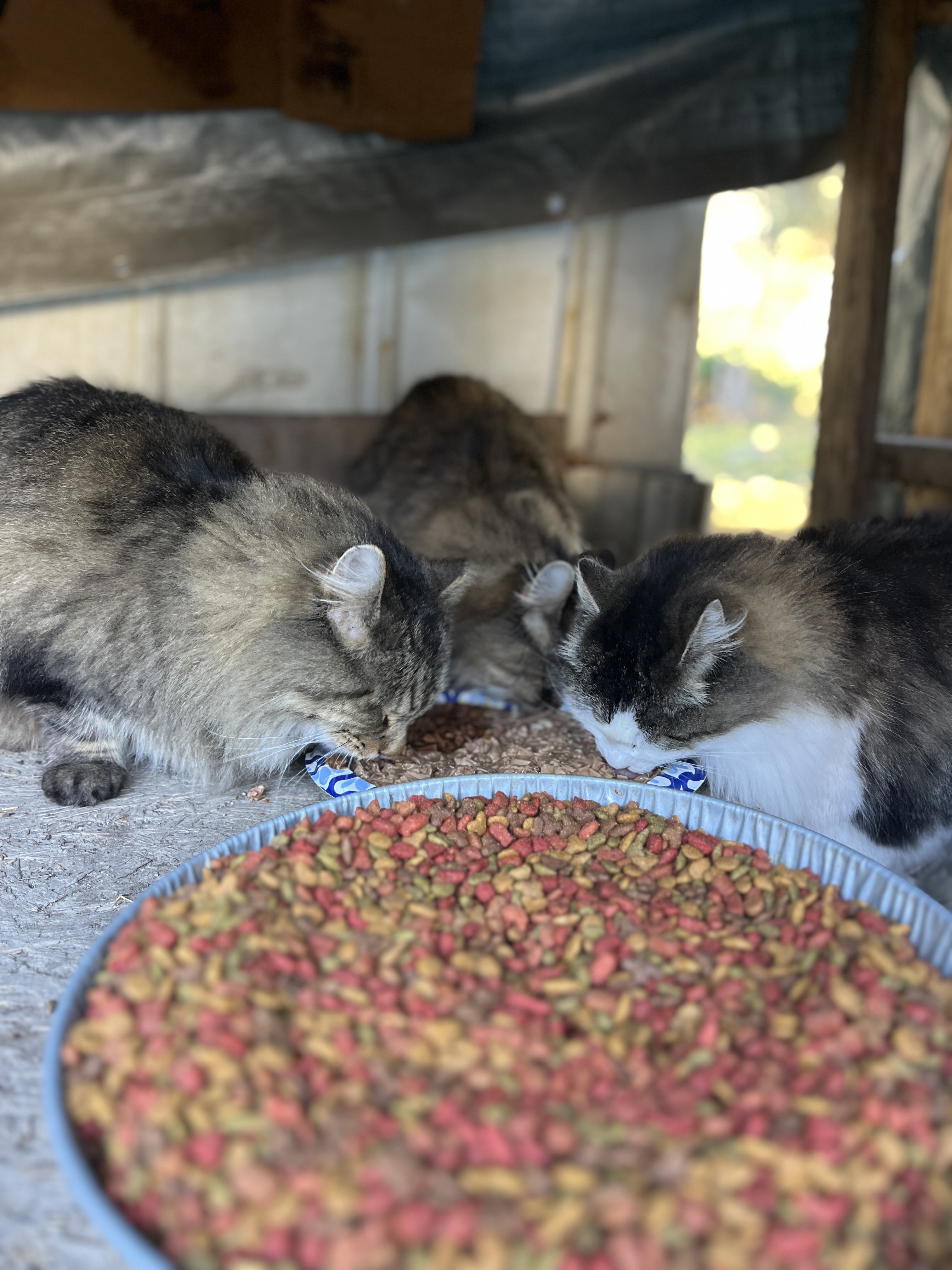
Caring for a feral cat colony involves more than just providing food; it requires a compassionate and systematic approach to ensure the health and safety of the cats and the community. At Feed & Fix Foundation, we have gathered extensive experience and insights into the essential resources and strategies needed for effective colony management. Here’s a guide to help you care for a feral cat colony responsibly.
1. Knowledge of TNR Programs
Trap-Neuter-Return (TNR) is fundamental to managing feral cat populations healthily and humanely. Understanding how TNR works and participating in or initiating such programs can help stabilize the colony’s population, reduce aggressive behavior, and improve overall health.
2. Feeding Stations
Establish designated feeding stations that are discreet and protected from the elements. These stations should be easy to clean and placed away from high traffic areas to reduce the risk of human-cat conflicts. Consistent feeding times help regulate the cats’ eating habits and make it easier to monitor their health and numbers.
3. Water Sources
Always ensure there is a clean, unfrozen water source available. This is especially important during hot weather and in winter when natural sources may be scarce or frozen.
4. Shelter
Provide adequate shelter to protect the cats from environmental elements. Insulated shelters, which can be made from simple materials like storage bins and straw, offer refuge during cold and wet conditions. Ensure shelters are discreetly placed and elevated to keep the cats safe from potential threats.
5. Health Care
Regular health checks are crucial. Work with veterinarians who are experienced in dealing with feral cats to manage health issues such as vaccinations, parasite control, and treatment of injuries or illnesses. Keeping a health record for each cat can be very helpful.
6. Community Engagement
Educate and engage the local community about the presence and role of a feral cat colony. Clear communication can foster a supportive environment and dispel myths that may lead to hostility. Encourage local residents to participate in TNR programs or support colony care.
7. Emergency Preparedness
Have a plan for emergencies, such as extreme weather events, which may require you to provide them with additional care and supplies.
10. Fundraising and Resources
Managing a feral cat colony can be resource-intensive. Fundraising or engaging the community for donations of food, funds for TNR, and shelter materials can help sustain your efforts.
Caring for a feral cat colony is a rewarding commitment that makes a significant difference in the lives of the cats and the ecological balance of the community. By providing these essentials, you can ensure a humane and effective management of the colony, promoting a coexistent environment where both the community and the cats benefit.
Leave a Reply