
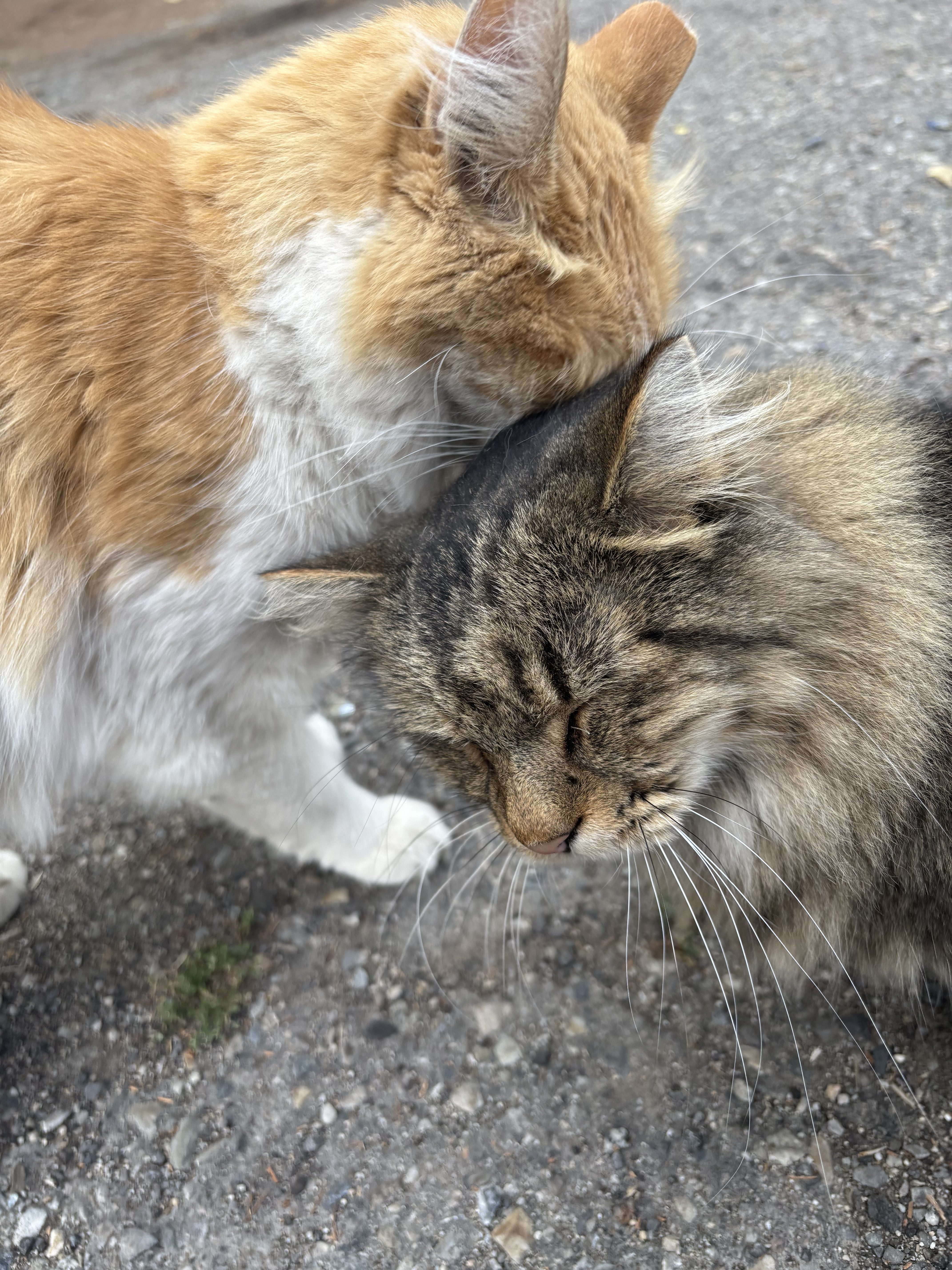
When people hear the words “cat colony,” they often picture something chaotic or out of control.
But the reality is something very different.
A cat colony is simply a group of community cats: cats who live outdoors and aren’t owned, sharing a space they know as home.
You’ll find them everywhere. Quietly existing behind apartment buildings, tucked into neighborhoods, near parks, or out in more rural areas.
They form these colonies for a reason.
For safety.
For companionship.
For survival.
Because even cats who have learned to live without humans, still seek connection.
The Difference a Managed Colony Makes
Not all colonies are the same.
An unmanaged colony can struggle, leading to more kittens, more illness, and more tension with the surrounding community.
But a managed colony?
That’s where everything changes.
When cats are supported through Trap-Neuter-Return (TNR), consistently fed, and thoughtfully monitored, the entire dynamic shifts from survival mode to stability.
Stability Changes Everything
When every cat in a colony is spayed or neutered:
- The cycle of endless litters stops
- Fighting, mating behaviors, and roaming decrease
- The group becomes calm, predictable, and balanced
Instead of constant growth, the colony begins to naturally decline over time.
And that’s the goal. Not removal, not eradication but humane stabilization.
A Natural Balance Within the Community
Managed colonies don’t just help the cats, they help the environment around them.
Cats are natural hunters, and stable colonies can help keep rodent populations in check without the need for harmful poisons or traps.
And because the colony is already established and stable, it prevents new, unaltered cats from moving in and starting the cycle all over again.
This is something many people don’t realize:
When you remove cats, you don’t remove the problem.
You make space for it to start again.
Changing the Narrative
When a colony is cared for, it becomes something else entirely.
Not a nuisance.
Not a problem.
But a quiet, functioning part of the community.
Neighbors notice the difference: less noise, fewer kittens, healthier cats.
And over time, something even more important happens:
Understanding replaces frustration.
It Starts With Compassion
Every managed colony begins with someone who chooses to care.
Someone who notices.
Someone who shows up.
Someone who decides these cats are worth the effort.
Because they are.
The Bottom Line
Cat colonies will always exist.
The question is how do we choose to respond to them?
With neglect?
Or with compassion, structure, and long-term solutions?
Because when we choose management over indifference…
we don’t just change their lives.
We change the outcome entirely.
Leave a Reply