
When people hear “TNR,” most of them hear one thing: spay and neuter. Trap the cat, fix the cat, put the cat back. Done.
That’s not TNR. That’s one step of it.
Stopping the breeding cycle matters, and it’s a big part of why Feed & Fix exists. But a feral cat who leaves the clinic sterilized and still covered in ticks, fighting an ear infection, or nursing an abscess nobody looked at has not been helped the way she deserves. The before, the during and the after of TNR are every bit as important as the surgery itself.
What a full exam actually finds


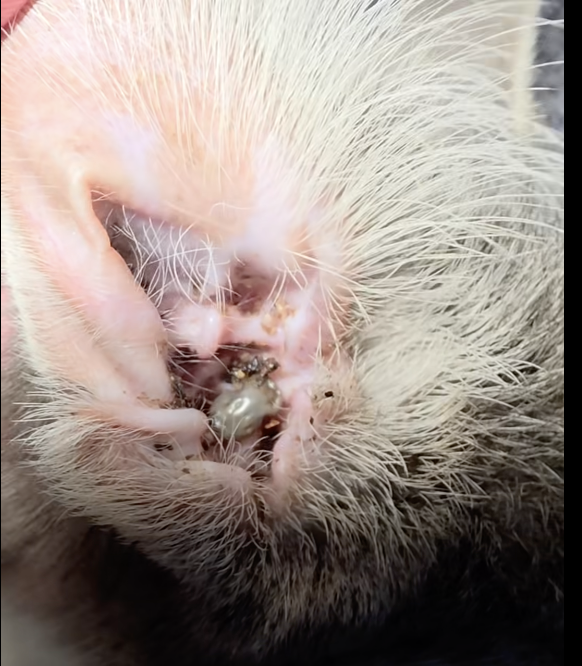
These photos come from our friends at Orchard Animal Clinic (Orchard Animal Outreach), one of the clinics in Utah that truly specializes in feral cats. This is the inside of a community cat’s ear. Look past the fur and you’ll see a tick buried deep in the ear canal, swollen from feeding, surrounded by dark crusted debris and irritated, inflamed skin.
And that wasn’t the only one. The swabs show what came out of that single ear: multiple ticks and a mess of debris. This cat could not tell anyone it was in pain. Feral cats hide illness and discomfort as a survival instinct, and you will never get close enough to see something like this in the field. The only time anyone is going to look inside that ear is while the cat is under anesthesia at the clinic.
If the clinic only does the spay or neuter, this cat goes back outside with every one of those ticks still attached.
Orchard shared this as a reminder of why they give a full exam and treatment to every single cat that comes in for TNR. They also give every cat a dose of topical Revolution, so that if anything gets missed, the cat still gets some relief from parasites. As they point out, those exams and treatments add cost and time for the clinic, and they do it anyway because they want these cats to go home able to thrive, not just unable to reproduce. They also noted something a lot of people don’t realize: ticks and fleas are everywhere in Utah, and yes, they survive cold weather and winter. “It’s cold out” does not mean a cat is parasite-free.
That is what good TNR looks like.
What a full exam should include
A feral cat may only be handled by a vet once in its entire life. That one visit has to count. When we bring a cat in, we want more than a surgery. We want the whole cat looked at, including:
- Ears: ticks, ear mites, infection and debris, like the cat in these photos
- Parasite treatment: fleas, ticks and mites treated, ideally with a broad topical like Revolution as a safety net
- Vaccines: rabies and FVRCP to protect the cat and the colony
- Wounds and abscesses: fight wounds are common, especially in unneutered males, and they can become serious fast
- Eyes, mouth and teeth: upper respiratory infections, eye injuries and painful dental disease
- Skin and coat: mange, ringworm, matting and anything else that will only get worse outside
- The ear tip: so everyone in the future knows this cat has already been fixed and doesn’t need to be trapped and put under again
TNR is a process, not a procedure
We covered the nuts and bolts in our TNR Basics post, and every stage of it exists for the cat’s health and safety, not just for the surgery.
Before
- Assess the colony. How many cats and kittens are there? Who is nursing? Are there kittens young enough to socialize and place with a rescue, or ones too young who should stay with mom until about 7–8 weeks? Assessment is also how you spot cats with visible injuries or illness that need attention.
- Use cameras. Motion-activated cameras let you count cats that only come out at night, see who’s dominant and who’s hiding kittens, and catch limping, skin conditions and other health problems you’d never see in person.
- Keep a feeding routine. Consistent feeding times and locations build trust, make trapping more successful, and give caretakers a daily chance to notice when a cat looks off or a new cat shows up.
- Trap train. Getting cats used to traps as a normal, non-threatening object lowers their stress, reduces the risk of a panicked cat injuring itself, and makes trap-shy cats far easier to catch.
During
- Prep the trap for comfort. Newspaper lining, paper bowls instead of metal or plastic, and a breathable dark cover over all four sides as soon as the cat is trapped so it feels hidden and safe.
- Time it right. Trap the day/evening before surgery so the cat spends as little time confined as possible.
- Choose the right clinic. This is where the full exam happens or doesn’t. Pick a clinic with real experience handling feral cats, one that supports TNR protocols, keeps handling to a minimum, lets cats recover in their traps, and examines and treats the whole cat. Not every clinic does, and it makes an enormous difference.
After
- Recover overnight. Cats should be held overnight in a quiet, controlled space so they can fully wake up from anesthesia, then released the next day back into their own territory once they’re alert and stable.
- Keep feeding and watching. The return is not the end. Daily feeding is how caretakers keep monitoring the colony’s health, catch new arrivals before they breed, and get sick or injured cats back in for care.
- Follow up. Cats get hurt, get sick and age. A managed colony means someone is paying attention for the rest of those cats’ lives.
TNR alone is not “better than nothing”
We hear it all the time: “At least they’re fixed. That’s better than nothing.”
We disagree. A sterilized cat dropped back outside with untreated parasites, open wounds, no vaccines and no one feeding or watching over it, has not been cared for. It has been processed. And when nobody is managing the colony afterward, new unfixed cats move in, the cycle starts again, and the community decides TNR “doesn’t work.”
TNR works when it is done as a whole commitment: careful planning before, a full exam and real medical care during, and ongoing feeding, monitoring and follow-up after. Spay and neuter is essential. It is just not the whole job.
How you can help
- If you’re trapping: ask your clinic what’s included beyond surgery. Exam? Parasite treatment? Vaccines? If the answer is just the spay or neuter, look for a feral-experienced clinic that does more.
- If you’re feeding a colony: keep a routine, keep an eye out, and reach out when a cat looks sick or hurt.
- If you want to support the work: full exams, parasite treatment and vaccines cost more than surgery alone. Please consider donating to Orchard Animal Clinic to help them continue this life saving work.
Leave a Reply